

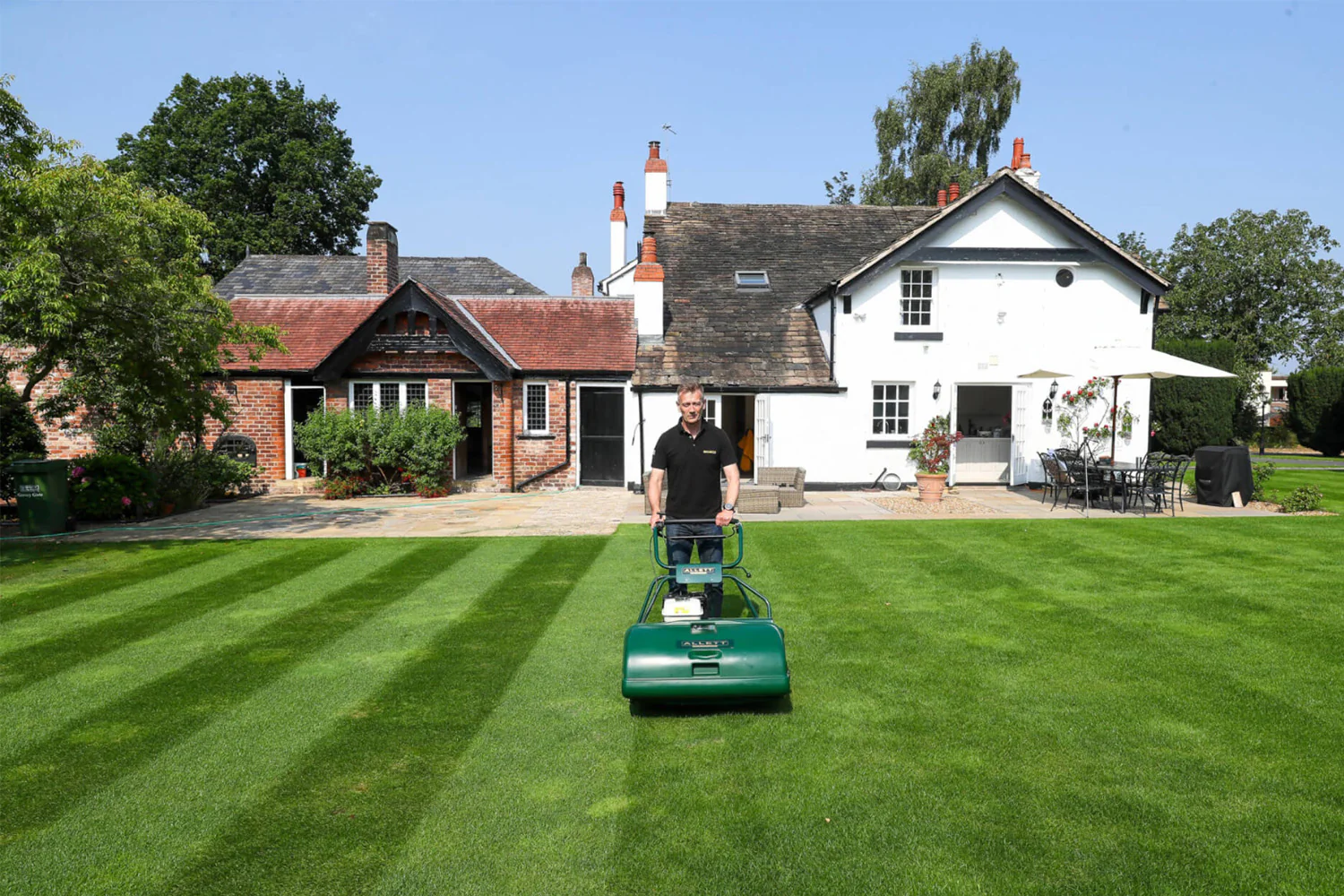
Creating the perfect striped lawn is as much about the right equipment as it is about mowing technique. While many gardeners focus on mowing patterns or blade height, the real success behind those clean, alternating light and dark stripes lies in the type of mower and roller technology used. The choice between a cylinder mower and a rotary mower is not simply about price or personal preference—it directly affects how well your lawn will stripe, how smooth the cut will be, and how much effort is required to achieve professional-looking results.
Striping, as many know, is the result of light reflecting off grass blades that have been bent in opposite directions. It’s not a matter of colour variation or chemical treatment but rather how each row of grass reflects sunlight differently based on its orientation. That bending is largely the work of the mower’s roller. The roller presses down on the grass blades, angling them uniformly in the direction of travel. When the mower turns and comes back the opposite way, the roller bends the grass in the other direction, and the light catches the two rows differently—creating the characteristic striped effect.
This effect is only as successful as the tools used to create it. The two most common mower types for domestic and professional lawn care—rotary and cylinder—achieve different levels of precision, and each comes with its own advantages, limitations, and maintenance needs.
Cylinder mowers are often considered the gold standard when it comes to striping and fine lawn finishes. Their design is unique in that they cut grass using a scissor-like action between a rotating cylinder of blades and a fixed bottom blade. This provides a cleaner, more precise cut, especially when mowing at lower heights. Because of this gentle and consistent cutting motion, cylinder mowers are ideal for well-maintained, ornamental lawns and are commonly used on sports turf and formal gardens.
The roller on a cylinder mower is typically full-width and mounted at the rear, ensuring consistent pressure across the entire stripe. The smoothness of this roller also allows for clean passes across the lawn without digging in or disturbing the surface. On a well-prepared lawn with dense turf, the striping effect produced by a cylinder mower is clear, sharp, and long-lasting. Cylinder mowers also offer greater control over mowing height, often with finer adjustment mechanisms than standard rotary models.
Rotary mowers, in contrast, work by spinning a horizontal blade at high speed beneath a protective deck. These are more common among domestic gardeners, largely because they’re versatile, generally lower in cost, and better suited to uneven or rugged lawns. A rotary mower can handle longer grass, small twigs, or debris more easily than a cylinder mower, which may struggle or become clogged in such conditions.
However, rotary mowers typically produce a less refined cut. Instead of slicing the grass, they chop it by impact, which can lead to frayed blade tips and a slightly browner appearance if the blade isn’t kept razor-sharp. This difference in cutting style also affects the quality of the stripe. Some rotary mowers come with built-in rear rollers or optional striping kits, which help replicate the visual effect of a cylinder mower. These rollers press the grass in the same way but may not apply as even or heavy a pressure, especially on uneven ground. As a result, stripes created by rotary mowers tend to be softer and may not last as long between cuts.
Despite these limitations, advances in roller technology have made rotary mowers far more effective than they used to be. Some now feature split rollers that follow the contour of the ground more effectively, reducing turf damage and improving consistency. Weighted rollers are also available, adding downward pressure for a more pronounced stripe. With regular maintenance and proper mowing height, a rotary mower with a good roller can produce impressive striping on the right type of lawn.
The choice between these two mower types should ultimately reflect the condition and purpose of the lawn. For those maintaining a small to medium-sized ornamental lawn that’s kept in good shape year-round, a cylinder mower is ideal. It offers precision, consistency, and the best possible striping effect. But cylinder mowers are less forgiving. They require sharper blades, more frequent servicing, and a relatively flat, debris-free lawn. If your lawn is larger, used regularly by children or pets, or tends to accumulate leaves and twigs, a rotary mower might be the more practical option. It offers durability, versatility, and easier maintenance.
One aspect that many overlook is how the weight and balance of the mower itself can impact both the cutting action and the striping result. Heavier mowers press more firmly into the lawn, bending grass blades more completely, which helps produce bolder stripes. However, too much weight can lead to soil compaction if mowing is done too frequently in the same direction. This is where alternating stripe direction and occasionally varying patterns becomes more than just a design choice—it’s a health measure for the turf itself.
Maintenance plays a major role in the performance of any mower. Cylinder blades must be sharpened and adjusted regularly to avoid uneven cuts or blade drag, while rotary blades need frequent sharpening to maintain a clean slicing edge. Both types of machines benefit from seasonal servicing, lubrication, and careful cleaning to remove built-up grass clippings, especially from around the roller and cutting deck. Mowing with a dirty or poorly maintained roller can result in uneven stripe formation, excessive wear on the lawn, and premature tool failure.
Ron Smith offers a variety of cylinder and rotary mowers suitable for both amateur gardeners and landscaping professionals. Their range includes high-performance machines with roller attachments specifically designed to deliver consistent striping results across lawns of various sizes and conditions. Whether you’re maintaining a small town garden or a sprawling estate, the right mower can transform the look and feel of your outdoor space with each pass.
It’s worth noting that mower choice also influences mowing frequency and schedule. Cylinder mowers often require more frequent mowing to perform optimally because they don’t handle overgrown grass well. Rotary mowers, by contrast, allow a bit more flexibility in timing but may not deliver quite the same crisp finish. Understanding how your tool interacts with the lawn—both above and below the surface—can help you strike the right balance between visual impact and practical care.
In the end, striping is not simply about visual appeal. It reflects a gardener’s attention to detail, understanding of materials, and relationship with their tools. Whether you choose a cylinder mower for maximum sharpness and definition, or a rotary mower for versatility and ease, the key lies in knowing your lawn and matching your approach to its unique demands. The mower isn’t just a machine—it’s a brush, and the lawn is your canvas.