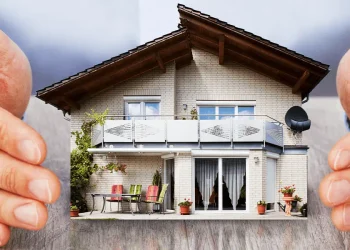


Naturally, it’s hard to see beyond the tangible, pressing needs of repairing fire damage. But it’s crucial to remember, you won’t be footing the whole bill yourself. Home insurance will cover the costs. And because you’re already calling in the experts and likely filing a claim, it’s a great time to view fire repair as an opportunity for significant home improvement. Fire damage repair and renovations can be a chance in a lifetime to reconfigure and redecorate your home to meet your current needs.
The “exposed studs” advantage
After remediation crews clear the soot and smoke damage, many homeowners are left with what amounts to a house stripped to the studs. It’s easy to look at that situation as rock bottom. In reality, it’s the exact opposite.
Your walls have been torn back to the studs, which means your electrical, plumbing, and insulation are all completely exposed. If you were going to do a basic kitchen or bathroom remodel, you’d have to tear out half of that room just to expose those systems. But that’s already been done for you. This is your opportunity to update your electrical to handle a modern load, replace pipes that are reaching the end of their life before one bursts in the future, and throw in insulation with a higher R-rating that’s going to save you on your utility bills for the next 20-odd years.
Most people skip doing these updates because it wasn’t in their insurance bid to have them reconstructed, and it’s one of the five most expensive mistakes homeowners make after a fire. The labor differential between doing it right now and doing it in five years is enormous.
Reconfiguring the floor plan while you can
You can eliminate non-load-bearing walls right now without a separate demo budget. If the original layout gave you an isolated kitchen or a hallway that bisected the main living space, take this opportunity to reimagine it. An open kitchen-to-living flow is standard in home design now for good reason – it radically changes how a room feels and how your family will use it.
Bring your contractor in early for a structural assessment. Fire can compromise load-bearing elements in ways that aren’t immediately apparent, so a structural engineer’s read is valuable enough to justify the expense. Once you know what’s able to move and what’s not, you have an opportunity to design your floor plan from the real constraints of the framework, rather than inheriting whatever the original builder decided on 50 years ago.
For fire damage repair phoenix in particular, it helps to work with a contractor who’s adept at both the claims process and navigating local permitting requirements – specifically because permit acquisition for layout changes has to run in parallel to the restoration timeline, not after it.
Restoration versus remodeling – the insurance distinction
These two words carry a lot of financial weight in the course of settling a claim. Restoration is returning your home to the way it was. Remodeling is making it better. For the former, the responsibility falls on your homeowners insurance, in most cases. The latter is on you.
If you’re insured for replacement cost value and in your area, arc-fault circuit interrupters and thicker fire blocking between wall cavities are required by current building codes, insurance may need to cover those upgrades, even if they weren’t in your original home.
Itemize everything. Get detailed quotes that separate code-required work from the discretionary improvements. The insurer has to contribute to the part that has been mandated by the codes and you’ll be on the hook for the voluntary stuff.
Material choices that protect and perform
Designing a new house after a fire is an opportunity to select materials that the original build didn’t include. The cost of fiber cement siding, fire-rated drywall, and metal roofing substrates, for example, is higher than their standard counterparts, but these non-combustible exterior options also pose a much lower fire risk and in some cases can reduce your insurance premiums. Some insurance companies will offer a lower rate if the house is reconstructed using these sorts of exterior materials. It doesn’t hurt to ask.
When it comes to what’s inside, the decision on flooring frequently turns out to be more significant than people realize. Hardwood is beautiful, but it’s higher maintenance, and it can expand and contract with humidity changes. Luxury vinyl plank is durable, ideal for high-traffic areas, and doesn’t hold on to odors like some softer options. Neither is the correct answer, but particularly in the event of a repeat catastrophe such as a house fire, easier-to-clean and durable surfaces make sense.
Also, while you’re staring at exposed studs, now is the perfect time to plan for any smart home devices you’ve considered but weren’t wired for in the past. Security cameras, lighting controls, and leak sensors can all be prewired with no surface-mount evidence. According to the NFPA, U.S. fire departments responded to an estimated annual average of 343,100 home structure fires per year between 2017 and 2021. Simple smoke detection hardwired into the electrical system is a sensible upgrade.
Indoor air quality as a baseline, not an afterthought
All smoke remediation must be finished before any finish work can start. This includes professional duct cleaning, HEPA air scrubbing, and testing of surfaces for residual soot and odor compounds. Drywalling over contaminated framing merely entombs the issue in the walls.
After the IAQ baseline has been confirmed, it’s not a bad idea to spec an HVAC filtration system upgrade as part of the mechanical work. A system with higher-rated filters that costs next to nothing extra to install with the rebuild will supply clean air for the life of the equipment.
Fire recovery is simply hard work. It is also one of the rare occasions where a homeowner has a clean starting point and an insurance settlement both working in the same direction. The homeowner that comes out ahead is the one that recognizes that and uses it as a vehicle.